Energy demand in AI computing
Accelerator computation consumes electricity alongside cooling, networking and idle capacity; utilisation affects the energy associated with each result.
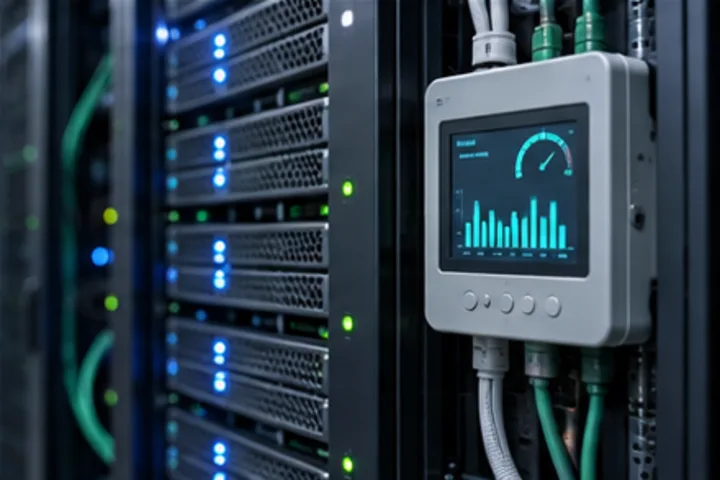
Accelerator computation consumes electricity alongside cooling, networking and idle capacity; utilisation affects the energy associated with each result. The practical issues surrounding AI computing energy appear when the technology has to operate alongside ordinary business processes, not merely when a representative task works in isolation. Hardware power ratings alone omit facility overhead and the effects of low utilisation. That distinction shapes the choices made by both the people responsible for technical performance and the people who pay for the finished result.
Inside the workflow
A research group schedules non-urgent experiments during periods of available capacity. Imagine the organisation conducting a limited evaluation of the approach. One of its first questions is whether the existing work is understood well enough to make a fair comparison. Some information may be recorded only when a problem occurs; some decisions may be made without an explicit record. Measure the work performed as well as the electricity used. The value of a new process is easier to examine when these behaviours have been identified before the test.
Electrical consumption during inference is only one contributor to computing energy. Memory and network equipment also draw power, and a cooled room consumes energy independently of whether every server is busy. For recurring jobs, energy can be associated with throughput over a complete operating period. Comparing work completed during that period provides a more useful efficiency measure than multiplying a component rating by the shortest observed execution time.
Handling uncertainty
Hardware power ratings alone omit facility overhead and the effects of low utilisation. A test should include at least some of the conditions that make this limitation relevant. Rather than deliberately creating an artificial catastrophe, look at the cases the existing team already finds difficult. Consider the electricity consumed while waiting for jobs. If the proposed process fails under one of those conditions, the important next question is whether the failure is easy to recognise and correct before its consequences reach another process.
A system evaluated on existing business records reflects the circumstances under which those records were produced. Processes change, terminology changes and new kinds of work appear. The arrival of a new customer group or product line can change the mix of inputs without any corresponding change to the underlying model. Keeping a dated collection of difficult cases makes it possible to detect deterioration after a software or business update.

What should be measured
An assessment focused on AI computing energy needs measurements associated with useful work. Relevant candidates are energy per completed task, average utilisation and cooling demand. A single favourable number can hide variation across locations, times of day or input types. Cooling plant consumption varies with weather and facility design. Separate those groups before calculating an aggregate. Differences in performance may reveal which operating conditions are appropriate and which ones need a different approach.
For an illustrative calculation, suppose 500 comparable tasks during an observation period require an average of 23 minutes with an established method and 16 minutes with a proposed replacement, including the normal handling of exceptions. The difference is 58.3 hours for that group of tasks. It is not a forecast for AI computing energy. It simply shows why the definition of completed work matters: uncorrected errors, delayed activity and additional maintenance time would change the calculation, even though the reported task duration remains the same.
Comparing the alternatives
A powerful accelerator running at low occupancy can be less efficient than a smaller fully utilised machine. The alternatives do not have to share the same underlying technique. What matters is the work accomplished, the conditions under which the result is acceptable and the effort required to maintain that result. Comparing a new approach to an unnecessarily complicated version of the old process makes the evaluation misleading. Use a credible conventional alternative, including the improvements that could reasonably be made without adopting AI computing energy.
Probabilistic systems handle some kinds of variation well and others badly. The relevant question is what information the system has when it makes a decision, and whether that information is sufficient. A result that seems convincing to an occasional user might be unacceptable in a process that handles thousands of records. An evaluation set should preserve the mix of straightforward requests, ambiguous input and cases where the appropriate action is to ask for more information.
Related analysis: Why AI needs good information architecture. It deals with another part of the same technical or commercial decision.
Operating costs after deployment
When evaluating AI computing energy, it is worth asking whether an estimate of savings concerns actual expenditure or a reduction in effort that can be put to other uses. They are not always equivalent. Reducing the time a specialist spends on a task may create capacity without reducing the department's payroll. The organisation benefits if it can direct that capacity toward work of value. The assessment should record the assumptions needed for that benefit to materialise.
AI models and their dependencies can change independently of the business processes they serve. It is useful to identify which version produced a result and to retain the test conditions that established suitability. A team can then examine a proposed update against a stable reference rather than interpreting different results as unexplained behaviour. Smaller changes are often easier to attribute to a particular cause than a simultaneous revision of the entire workflow.
Continuing evaluation
An implementation can be limited to a smaller group of tasks while the team examines its behaviour and documents the lessons. If the next group works under different conditions, it makes sense to test those differences before extending the same conclusions. For AI computing energy, changing the workload, the environment and the implementation simultaneously makes it difficult to determine why a result has improved or deteriorated.
Model-level performance and workflow-level performance are not the same measurement. An application may contain retrieval, formatting, validation and a human decision after the inference step. Each of these can preserve or undermine the quality of the result. Measure the complete workflow, but retain observations of the individual stages so that an expensive component is not changed merely because some unrelated stage was responsible for a poor outcome.
Another consideration is the relationship between observations and decisions. A measurement may be easy to collect because the equipment or software already produces it, even if it cannot establish whether the required work was accomplished. The team assessing AI computing energy can describe each proposed measurement alongside the decision it is expected to support. If the same decision could be made without that information, collecting it at great expense may be unnecessary. If an important decision has no corresponding evidence, the evaluation plan still contains a gap.
Scale deserves attention in its own right. The number of locations, records or pieces of equipment involved affects the way a process is supported. In some situations the additional work can be distributed efficiently; in others a shared resource or a small specialist group becomes a limiting factor. A prediction for AI computing energy should include the effects of a realistic increase in workload, not simply multiply a small test result by the number of proposed installations. Recheck the estimate where operations depend on scarce resources.
Existing processes may contain useful practices that are easy to overlook during a replacement. Someone often recognises an exception because of information absent from the official record, a convention that was never written down or a relationship between two earlier events. Examining these practices before changing AI computing energy can reveal which requirements the new approach must preserve. The important distinction is between unnecessary manual effort and judgement that genuinely contributes information. Only the first can be removed without replacing its function.