Machine vision on the factory floor
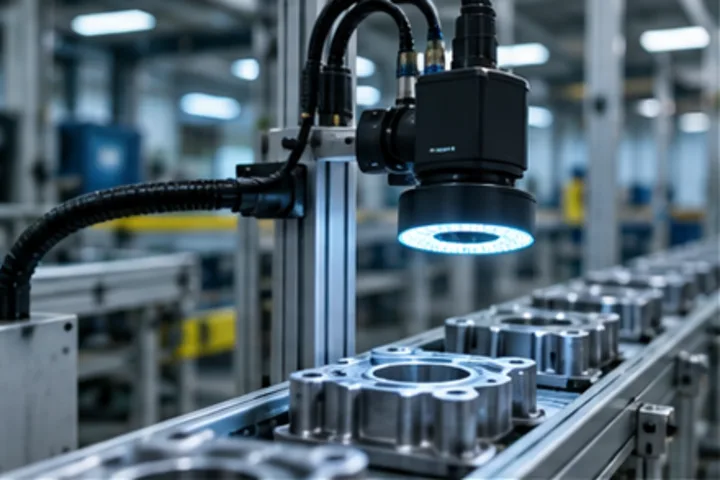
Cameras collect images under controlled lighting and a classifier or detector identifies features associated with specified defects.
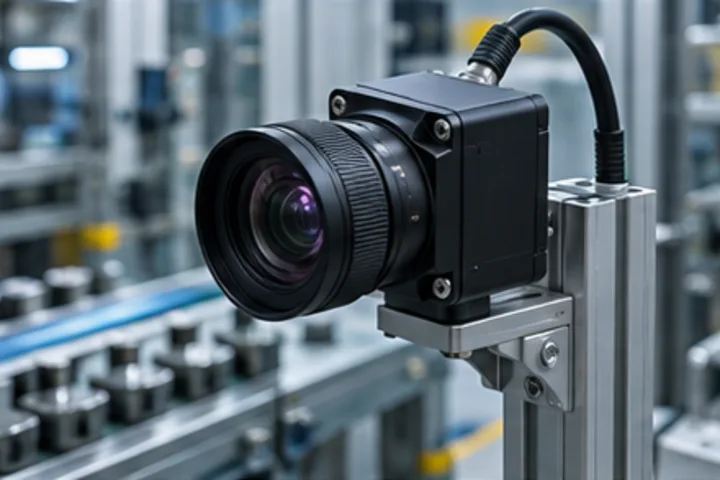
Changes in lighting, material colour or camera position can shift the image distribution. It creates a boundary around the use of industrial machine vision: performance should be assessed under conditions in which the technology is actually expected to work. Gathering evidence from these conditions may be more informative than making a decision from a favourable example at a demonstration. Cameras collect images under controlled lighting and a classifier or detector identifies features associated with specified defects.
Inside the workflow
A packaging line checks seal alignment before cartons move to the next station. In that hypothetical setting, the people evaluating industrial machine vision would start with an ordinary working period rather than the most impressive demonstration. They would record the number of tasks they attempt, the outcome of these tasks and the effort required to handle exceptions. The same observations can then be made with the new approach. Use samples from the actual camera position and lighting conditions. This makes the evidence useful to someone responsible for continued operation, not just for the initial installation.
Two defects of equal physical size may have different visual signatures. A seal can be folded in a way that remains visible from one camera position but disappears from another. Before choosing a classifier, an engineering team should check whether the lighting arrangement, lens and mechanical fixture consistently reveal the feature. Improving the physical image may simplify the software considerably and reduce the amount of training material necessary.
Handling uncertainty
Changes in lighting, material colour or camera position can shift the image distribution. A test should include at least some of the conditions that make this limitation relevant. Rather than deliberately creating an artificial catastrophe, look at the cases the existing team already finds difficult. Testing needs to capture line speed and the consequences of missed detections. If the proposed process fails under one of those conditions, the important next question is whether the failure is easy to recognise and correct before its consequences reach another process.
An employee reviewing AI output needs the information and authority to correct it. A review screen that displays only the generated answer encourages acceptance without allowing the reviewer to examine the underlying material. More useful interfaces reveal which input or record matters, what the system was asked to do and why a particular case needs attention. Review time is part of the cost of delivering a dependable result.
What should be measured
For this application, false rejects, missed defects and inspection throughput provide a starting point for an evaluation. It is better to establish the time period and the definition of each measure before a trial starts, so an inconvenient result is not subsequently explained away by changing the test. Defects often occur much less frequently than acceptable products. The level of detail should be proportional to the decision: observations supporting a major deployment need to represent more variation than those used to rule out an unsuitable prototype.
For an illustrative calculation, suppose 320 comparable tasks during an observation period require an average of 14 minutes with an established method and 11 minutes with a proposed replacement, including the normal handling of exceptions. The difference is 16.0 hours for that group of tasks. It is not a forecast for industrial machine vision. It simply shows why the definition of completed work matters: uncorrected errors, delayed activity and additional maintenance time would change the calculation, even though the reported task duration remains the same.
Comparing the alternatives
A conventional optical sensor may outperform a complex model when the distinction is purely geometric. The alternatives do not have to share the same underlying technique. What matters is the work accomplished, the conditions under which the result is acceptable and the effort required to maintain that result. Comparing a new approach to an unnecessarily complicated version of the old process makes the evaluation misleading. Use a credible conventional alternative, including the improvements that could reasonably be made without adopting industrial machine vision.
Probabilistic systems handle some kinds of variation well and others badly. The relevant question is what information the system has when it makes a decision, and whether that information is sufficient. A result that seems convincing to an occasional user might be unacceptable in a process that handles thousands of records. An evaluation set should preserve the mix of straightforward requests, ambiguous input and cases where the appropriate action is to ask for more information.
Related analysis: The hidden work behind reliable AI evaluations. It deals with another part of the same technical or commercial decision.
Operating costs after deployment
When evaluating industrial machine vision, it is worth asking whether an estimate of savings concerns actual expenditure or a reduction in effort that can be put to other uses. They are not always equivalent. Reducing the time a specialist spends on a task may create capacity without reducing the department's payroll. The organisation benefits if it can direct that capacity toward work of value. The assessment should record the assumptions needed for that benefit to materialise.
Model-level performance and workflow-level performance are not the same measurement. An application may contain retrieval, formatting, validation and a human decision after the inference step. Each of these can preserve or undermine the quality of the result. Measure the complete workflow, but retain observations of the individual stages so that an expensive component is not changed merely because some unrelated stage was responsible for a poor outcome.
Continuing evaluation
A decision to adopt industrial machine vision will also change responsibilities. Establish which person or group looks at the observations when the system is healthy and who acts when something goes wrong. Documents that identify only a project manager are insufficient once the project becomes part of routine operation. The work of collecting performance information, investigating exceptions and authorising changes needs a continuing place in the operating plan.
A system evaluated on existing business records reflects the circumstances under which those records were produced. Processes change, terminology changes and new kinds of work appear. The arrival of a new customer group or product line can change the mix of inputs without any corresponding change to the underlying model. Keeping a dated collection of difficult cases makes it possible to detect deterioration after a software or business update.
Another consideration is the relationship between observations and decisions. A measurement may be easy to collect because the equipment or software already produces it, even if it cannot establish whether the required work was accomplished. The team assessing industrial machine vision can describe each proposed measurement alongside the decision it is expected to support. If the same decision could be made without that information, collecting it at great expense may be unnecessary. If an important decision has no corresponding evidence, the evaluation plan still contains a gap.
Scale deserves attention in its own right. The number of locations, records or pieces of equipment involved affects the way a process is supported. In some situations the additional work can be distributed efficiently; in others a shared resource or a small specialist group becomes a limiting factor. A prediction for industrial machine vision should include the effects of a realistic increase in workload, not simply multiply a small test result by the number of proposed installations. Recheck the estimate where operations depend on scarce resources.
Existing processes may contain useful practices that are easy to overlook during a replacement. Someone often recognises an exception because of information absent from the official record, a convention that was never written down or a relationship between two earlier events. Examining these practices before changing industrial machine vision can reveal which requirements the new approach must preserve. The important distinction is between unnecessary manual effort and judgement that genuinely contributes information. Only the first can be removed without replacing its function.