Computer vision in agricultural machinery
Cameras and processing systems identify visible features associated with crop rows, boundaries or equipment position.
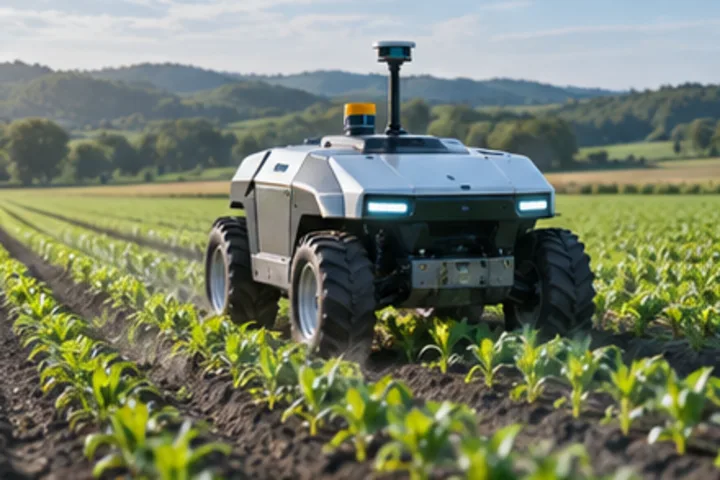
Cameras and processing systems identify visible features associated with crop rows, boundaries or equipment position. The distinction becomes clearer when a technical decision is framed in terms of the work that would otherwise be required. A simpler positional sensor can remain dependable when visual features are hard to distinguish. For an organisation considering agricultural automation, the first useful comparison is with its current practice rather than the most ambitious description of a future system.
How it fits into a real system
A farm evaluates guidance assistance for repetitive movement during field operations. This is an illustrative scenario, rather than the results of a specific deployment. The existing process provides the useful point of comparison: what information enters it, which steps consume time, what the employee or device needs to produce, and where exceptions currently go. Identify the work that the proposed system will remove, but also count additional tasks introduced by the change. Terrain and crop appearance vary during a season.
A camera looking across agricultural rows encounters changing plant shapes, sun direction, dust and shadows. Guidance that works early in the season may encounter a substantially different visual environment later. Testing samples from multiple field conditions is important; a single high-quality recording is not a substitute for assessing how the equipment behaves when visibility deteriorates during ordinary work.
Conditions that affect performance
Evaluation should include typical and difficult environmental conditions. This is particularly relevant because dust, changing sunlight and seasonal changes make visual conditions far less stable than in a laboratory. The team needs an explicit account of which conditions lie outside the design assumptions for the system. An unexpected input can then be treated as a known kind of exception instead of being mistaken for an ordinary result. That boundary also gives the maintenance team a starting point when circumstances change.
Broad descriptions of a technology can suggest that every organisation working in a large sector is a possible customer. Actual suitability depends on a much narrower set of requirements. A particular task may demand a combination of precision, speed and environmental tolerance unavailable from cheaper alternatives. Identifying that combination is more persuasive than assuming a theoretical advantage applies to all uses of the technology.
Testing the complete application
An assessment focused on agricultural automation needs measurements associated with useful work. Relevant candidates are position accuracy, operation time and interruption frequency. A single favourable number can hide variation across locations, times of day or input types. Dust and vibration affect optical equipment. Separate those groups before calculating an aggregate. Differences in performance may reveal which operating conditions are appropriate and which ones need a different approach.
For an illustrative calculation, suppose 250 comparable tasks during an observation period require an average of 27 minutes with an established method and 25 minutes with a proposed replacement, including the normal handling of exceptions. The difference is 8.3 hours for that group of tasks. It is not a forecast for agricultural automation. It simply shows why the definition of completed work matters: uncorrected errors, delayed activity and additional maintenance time would change the calculation, even though the reported task duration remains the same.
The engineering alternatives
A simpler positional sensor can remain dependable when visual features are hard to distinguish. The alternatives do not have to share the same underlying technique. What matters is the work accomplished, the conditions under which the result is acceptable and the effort required to maintain that result. Comparing a new approach to an unnecessarily complicated version of the old process makes the evaluation misleading. Use a credible conventional alternative, including the improvements that could reasonably be made without adopting agricultural automation.
Experimental measurements reveal behaviour under the specified conditions of the test. Those conditions may exclude vibration, dust, temperature changes or the variety of tasks encountered by a real operator. A product can be technically sound but unsuitable for one setting. Reproducing the relevant physical conditions and examining several independent units makes an assessment more informative than repeating one favourable demonstration.
Related analysis: The engineering behind spatial computing interfaces. It deals with another part of the same technical or commercial decision.
Cost in the operating environment
When evaluating agricultural automation, it is worth asking whether an estimate of savings concerns actual expenditure or a reduction in effort that can be put to other uses. They are not always equivalent. Reducing the time a specialist spends on a task may create capacity without reducing the department's payroll. The organisation benefits if it can direct that capacity toward work of value. The assessment should record the assumptions needed for that benefit to materialise.
New technology seldom arrives in an otherwise empty environment. Facilities already have communication networks, maintenance procedures and equipment that cannot be replaced immediately. Integration may require conversion between different physical or digital representations. The work should be included in the assessment of a proposed system, rather than being treated as an incidental expense after a successful test of the new component.
From demonstration to deployment
After a decision about agricultural automation, the original comparison can become a useful part of operational documentation. It records which conditions justified the investment and which limitations were accepted. A later team might face a change in workload or a new equipment version without knowing why an earlier decision was made. Retaining the evidence is more useful than preserving only the final recommendation.
A promising technology still operates within the available energy, materials, space and time. Improving a single property can shift the problem to a neighbouring component. For instance, faster data processing may produce heat that has to be removed, while a more precise measurement may require steadier positioning. A complete design should be evaluated under the constraints of the environment in which it will be used.
Another consideration is the relationship between observations and decisions. A measurement may be easy to collect because the equipment or software already produces it, even if it cannot establish whether the required work was accomplished. The team assessing agricultural automation can describe each proposed measurement alongside the decision it is expected to support. If the same decision could be made without that information, collecting it at great expense may be unnecessary. If an important decision has no corresponding evidence, the evaluation plan still contains a gap.
Scale deserves attention in its own right. The number of locations, records or pieces of equipment involved affects the way a process is supported. In some situations the additional work can be distributed efficiently; in others a shared resource or a small specialist group becomes a limiting factor. A prediction for agricultural automation should include the effects of a realistic increase in workload, not simply multiply a small test result by the number of proposed installations. Recheck the estimate where operations depend on scarce resources.
Existing processes may contain useful practices that are easy to overlook during a replacement. Someone often recognises an exception because of information absent from the official record, a convention that was never written down or a relationship between two earlier events. Examining these practices before changing agricultural automation can reveal which requirements the new approach must preserve. The important distinction is between unnecessary manual effort and judgement that genuinely contributes information. Only the first can be removed without replacing its function.
The final choice depends on the combination of operating constraints and expected workload. Establishing a decision threshold before a trial gives the results greater meaning: the threshold should reflect the consequences of failure and the benefit of improvement. It can also provide a credible reason not to proceed with agricultural automation when the expected advantage is too small. A technology can be technically valid without offering sufficient value for a particular application.