The engineering behind spatial computing interfaces
A spatial interface estimates position and orientation, aligns digital content with physical motion and renders the result with limited delay.
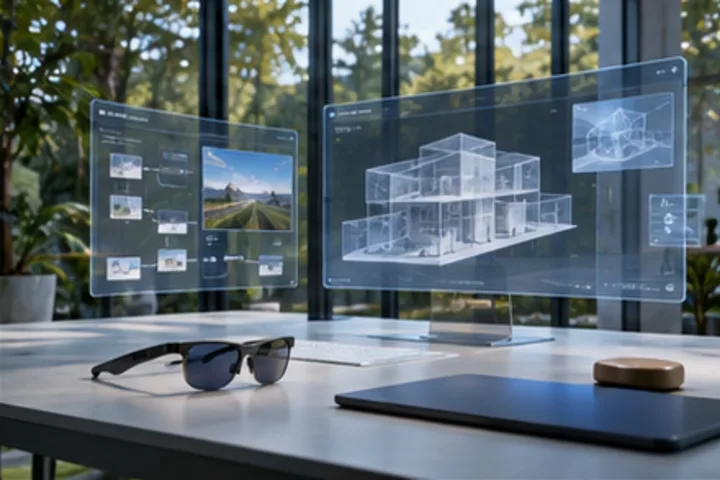
Tracking drift and display latency interfere with alignment, comfort and the usefulness of precision tasks. It creates a boundary around the use of spatial computing interfaces: performance should be assessed under conditions in which the technology is actually expected to work. Gathering evidence from these conditions may be more informative than making a decision from a favourable example at a demonstration. A spatial interface estimates position and orientation, aligns digital content with physical motion and renders the result with limited delay.
How it fits into a real system
A product designer reviews a model at approximately its physical size before fabricating a mock-up. Imagine the organisation conducting a limited evaluation of the approach. One of its first questions is whether the existing work is understood well enough to make a fair comparison. Some information may be recorded only when a problem occurs; some decisions may be made without an explicit record. Tracking and rendering have separate sources of delay. The value of a new process is easier to examine when these behaviours have been identified before the test.
Spatial systems combine tracking measurements with an estimate of the user's viewpoint. The rendered representation may move incorrectly if these estimates arrive at different times. A task requiring positional judgement is therefore more sensitive to alignment than a task involving a broad visual demonstration. The acceptable delay depends on the interaction and on whether the user must compare a virtual object with a physical component.
Conditions that affect performance
The design decision is complicated by a straightforward limitation: tracking drift and display latency interfere with alignment, comfort and the usefulness of precision tasks. A failure that is obvious and contained is easier to manage than a subtle deterioration that becomes embedded in later work. The display should be judged against the actual task and ergonomics. During an evaluation, compare observations of unusual conditions with the records of the previous process to establish whether the proposed change improves or worsens the ability to recover.
Broad descriptions of a technology can suggest that every organisation working in a large sector is a possible customer. Actual suitability depends on a much narrower set of requirements. A particular task may demand a combination of precision, speed and environmental tolerance unavailable from cheaper alternatives. Identifying that combination is more persuasive than assuming a theoretical advantage applies to all uses of the technology.
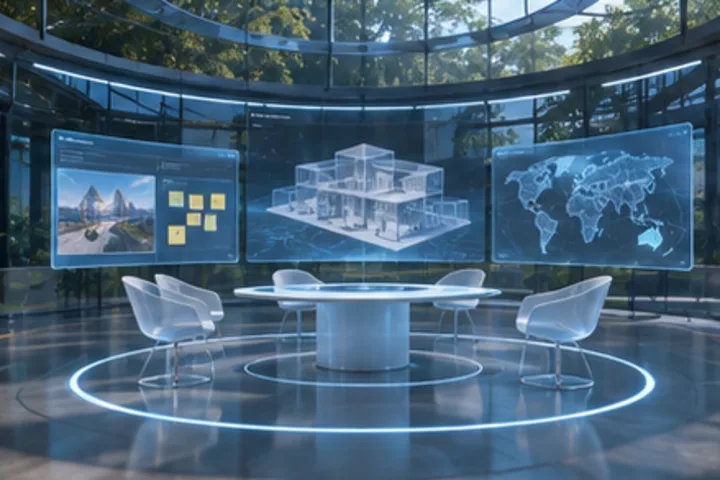
Testing the complete application
For this application, alignment error, latency and usable session duration provide a starting point for an evaluation. It is better to establish the time period and the definition of each measure before a trial starts, so an inconvenient result is not subsequently explained away by changing the test. Virtual objects need accurate scale and alignment. The level of detail should be proportional to the decision: observations supporting a major deployment need to represent more variation than those used to rule out an unsuitable prototype.
For an illustrative calculation, suppose 400 comparable tasks during an observation period require an average of 23 minutes with an established method and 18 minutes with a proposed replacement, including the normal handling of exceptions. The difference is 33.3 hours for that group of tasks. It is not a forecast for spatial computing interfaces. It simply shows why the definition of completed work matters: uncorrected errors, delayed activity and additional maintenance time would change the calculation, even though the reported task duration remains the same.
The engineering alternatives
A conventional monitor can be better for detailed text and prolonged desk-based work. The alternatives do not have to share the same underlying technique. What matters is the work accomplished, the conditions under which the result is acceptable and the effort required to maintain that result. Comparing a new approach to an unnecessarily complicated version of the old process makes the evaluation misleading. Use a credible conventional alternative, including the improvements that could reasonably be made without adopting spatial computing interfaces.
A promising technology still operates within the available energy, materials, space and time. Improving a single property can shift the problem to a neighbouring component. For instance, faster data processing may produce heat that has to be removed, while a more precise measurement may require steadier positioning. A complete design should be evaluated under the constraints of the environment in which it will be used.
Related analysis: Digital twins beyond the demonstration stage. It deals with another part of the same technical or commercial decision.
Cost in the operating environment
A cost assessment of spatial computing interfaces should separate initial work from recurring operation. Initial costs can include selecting equipment or software, changing existing processes and testing the implementation. Recurring costs can include supervision, maintenance, replacement, computation and the handling of exceptions. Some of these appear in another department's budget. For a fair comparison, allocate them to the work that creates them rather than interpreting an invoice for one component as the total cost of the system.
A technical specification describes performance using a defined procedure and unit of measurement. It does not necessarily establish how much useful work a complete system can accomplish. Measurements should be tied to an application, including the time before and after the measured operation. A system with a superior component may have no corresponding advantage when that component accounts for a small proportion of the overall task.
From demonstration to deployment
An implementation can be limited to a smaller group of tasks while the team examines its behaviour and documents the lessons. If the next group works under different conditions, it makes sense to test those differences before extending the same conclusions. For spatial computing interfaces, changing the workload, the environment and the implementation simultaneously makes it difficult to determine why a result has improved or deteriorated.
Experimental measurements reveal behaviour under the specified conditions of the test. Those conditions may exclude vibration, dust, temperature changes or the variety of tasks encountered by a real operator. A product can be technically sound but unsuitable for one setting. Reproducing the relevant physical conditions and examining several independent units makes an assessment more informative than repeating one favourable demonstration.
Another consideration is the relationship between observations and decisions. A measurement may be easy to collect because the equipment or software already produces it, even if it cannot establish whether the required work was accomplished. The team assessing spatial computing interfaces can describe each proposed measurement alongside the decision it is expected to support. If the same decision could be made without that information, collecting it at great expense may be unnecessary. If an important decision has no corresponding evidence, the evaluation plan still contains a gap.
Scale deserves attention in its own right. The number of locations, records or pieces of equipment involved affects the way a process is supported. In some situations the additional work can be distributed efficiently; in others a shared resource or a small specialist group becomes a limiting factor. A prediction for spatial computing interfaces should include the effects of a realistic increase in workload, not simply multiply a small test result by the number of proposed installations. Recheck the estimate where operations depend on scarce resources.
Existing processes may contain useful practices that are easy to overlook during a replacement. Someone often recognises an exception because of information absent from the official record, a convention that was never written down or a relationship between two earlier events. Examining these practices before changing spatial computing interfaces can reveal which requirements the new approach must preserve. The important distinction is between unnecessary manual effort and judgement that genuinely contributes information. Only the first can be removed without replacing its function.