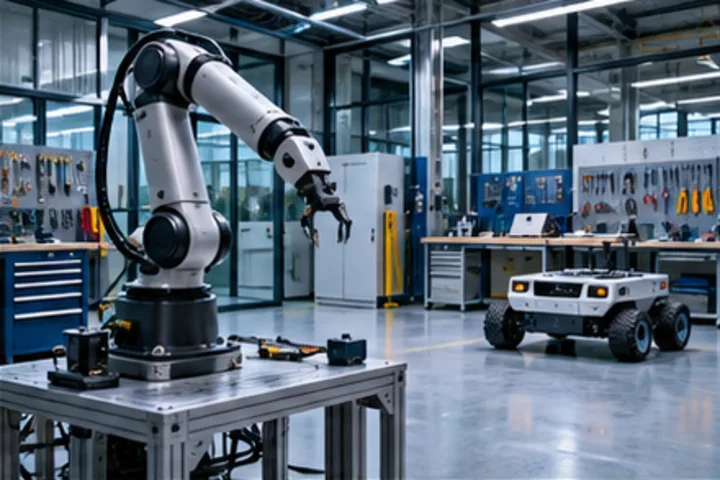
Why deep-tech companies need technical milestones
Milestones convert research uncertainty into testable targets covering repeatability, manufacturing and performance under specified conditions.

Milestones convert research uncertainty into testable targets covering repeatability, manufacturing and performance under specified conditions. The practical issues surrounding deep-tech milestones appear when the technology has to operate alongside ordinary business processes, not merely when a representative task works in isolation. A target chosen only because it looks impressive may not reduce the uncertainty affecting commercial readiness. That distinction shapes the choices made by both the people responsible for technical performance and the people who pay for the finished result.
Testing the proposition
An optics team establishes a sequence of experiments before investing in a custom production fixture. In that hypothetical setting, the people evaluating deep-tech milestones would start with an ordinary working period rather than the most impressive demonstration. They would record the number of tasks they attempt, the outcome of these tasks and the effort required to handle exceptions. The same observations can then be made with the new approach. An evidence threshold should be established before an experiment begins. This makes the evidence useful to someone responsible for continued operation, not just for the initial installation.
An optical prototype that measures distance with sufficient accuracy may face a separate challenge when the measurement must be repeated automatically across many units. A technical milestone can specify both the tolerance and the method of establishing it. Later milestones may concern assembly yield and maintenance under expected conditions. They should establish progress on distinct unknowns rather than repeat the original demonstration.
What can stop adoption
A target chosen only because it looks impressive may not reduce the uncertainty affecting commercial readiness. A test should include at least some of the conditions that make this limitation relevant. Rather than deliberately creating an artificial catastrophe, look at the cases the existing team already finds difficult. Keep commercial assumptions separate from precision or performance measurements. If the proposed process fails under one of those conditions, the important next question is whether the failure is easy to recognise and correct before its consequences reach another process.
A technology business can establish that an idea works while remaining uncertain about production cost, buyer demand or the time it takes to deploy. These questions need different kinds of evidence. A successful trial provides information about the trial conditions, not a complete answer about market size. Keeping assumptions separate helps prevent progress in one area being mistaken for resolution of an unrelated commercial uncertainty.

Evidence from the trial
An assessment focused on deep-tech milestones needs measurements associated with useful work. Relevant candidates are milestone evidence, reproducibility and time to reduce uncertainty. A single favourable number can hide variation across locations, times of day or input types. A technical milestone may include failure with useful information. Separate those groups before calculating an aggregate. Differences in performance may reveal which operating conditions are appropriate and which ones need a different approach.
For an illustrative calculation, suppose 500 comparable tasks during an observation period require an average of 27 minutes with an established method and 20 minutes with a proposed replacement, including the normal handling of exceptions. The difference is 58.3 hours for that group of tasks. It is not a forecast for deep-tech milestones. It simply shows why the definition of completed work matters: uncorrected errors, delayed activity and additional maintenance time would change the calculation, even though the reported task duration remains the same.
Competing ways to solve the problem
The decision is not simply whether deep-tech milestones works. A successful demonstration of one component may not validate an integrated product. A buyer should examine which requirements make the more specialised approach useful. If an expensive capability is used for only a small portion of tasks, it may be appropriate to limit its deployment to that portion. The cost and complexity of running two approaches have to enter that calculation, alongside the savings each offers.
Early deployments offer unusually direct feedback because the people who built the system may also observe it in operation. That convenience can conceal what it would cost to support many installations. The team should distinguish work that needs unusual engineering attention from routine steps that a trained operator could perform. Repeated requests for the same assistance often reveal an opportunity to improve the product itself.
Related analysis: Building technology partnerships without losing focus. It deals with another part of the same technical or commercial decision.
The financial case
A cost assessment of deep-tech milestones should separate initial work from recurring operation. Initial costs can include selecting equipment or software, changing existing processes and testing the implementation. Recurring costs can include supervision, maintenance, replacement, computation and the handling of exceptions. Some of these appear in another department's budget. For a fair comparison, allocate them to the work that creates them rather than interpreting an invoice for one component as the total cost of the system.
Engineering and commercial teams should know which unanswered question their next expenditure is intended to resolve. Building a production fixture, hiring a support engineer and running an additional laboratory test reduce different kinds of uncertainty. The decision is stronger when the expected evidence is clear in advance. An inconclusive outcome can still be useful if it rules out a particular approach without creating a larger commitment.
Building for the next stage
After a decision about deep-tech milestones, the original comparison can become a useful part of operational documentation. It records which conditions justified the investment and which limitations were accepted. A later team might face a change in workload or a new equipment version without knowing why an earlier decision was made. Retaining the evidence is more useful than preserving only the final recommendation.
Revenue estimates are incomplete without the timing and cost of fulfilling orders. Physical technology products often require components well before a customer accepts the finished installation. A growing order book can therefore increase the amount of money tied up in work in progress. Supplier reliability, batch size and inventory commitments influence the ability to deliver as much as the headline number of orders.
Another consideration is the relationship between observations and decisions. A measurement may be easy to collect because the equipment or software already produces it, even if it cannot establish whether the required work was accomplished. The team assessing deep-tech milestones can describe each proposed measurement alongside the decision it is expected to support. If the same decision could be made without that information, collecting it at great expense may be unnecessary. If an important decision has no corresponding evidence, the evaluation plan still contains a gap.
Scale deserves attention in its own right. The number of locations, records or pieces of equipment involved affects the way a process is supported. In some situations the additional work can be distributed efficiently; in others a shared resource or a small specialist group becomes a limiting factor. A prediction for deep-tech milestones should include the effects of a realistic increase in workload, not simply multiply a small test result by the number of proposed installations. Recheck the estimate where operations depend on scarce resources.
Existing processes may contain useful practices that are easy to overlook during a replacement. Someone often recognises an exception because of information absent from the official record, a convention that was never written down or a relationship between two earlier events. Examining these practices before changing deep-tech milestones can reveal which requirements the new approach must preserve. The important distinction is between unnecessary manual effort and judgement that genuinely contributes information. Only the first can be removed without replacing its function.