Designing APIs that survive business change
Stable interfaces define expected inputs, outputs and errors; versioning allows independent teams to change implementations without immediate.
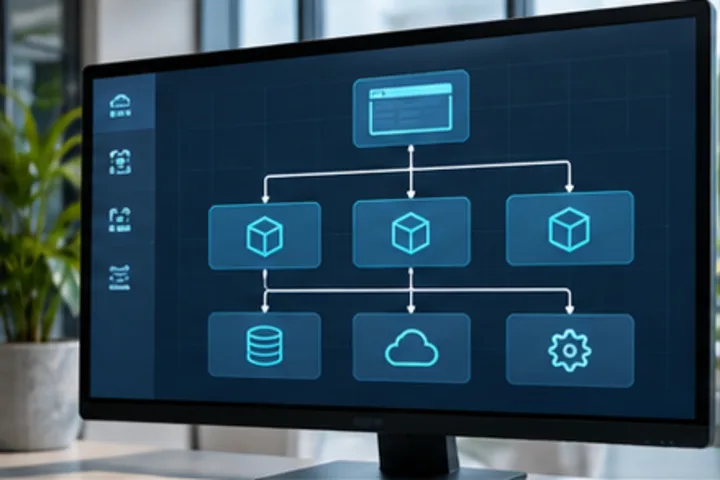
Stable interfaces define expected inputs, outputs and errors; versioning allows independent teams to change implementations without immediate coordination. The practical issues surrounding application interfaces appear when the technology has to operate alongside ordinary business processes, not merely when a representative task works in isolation. Changing identifiers or field meanings can break a consumer even if the interface technically returns valid data. That distinction shapes the choices made by both the people responsible for technical performance and the people who pay for the finished result.
The operational model
A logistics service updates its order application while keeping partner integrations operating through an existing interface. In that hypothetical setting, the people evaluating application interfaces would start with an ordinary working period rather than the most impressive demonstration. They would record the number of tasks they attempt, the outcome of these tasks and the effort required to handle exceptions. The same observations can then be made with the new approach. Interfaces should make failure conditions understandable to their consumers. This makes the evidence useful to someone responsible for continued operation, not just for the initial installation.
Suppose an interface returns a shipment status that originally meant the item had left the warehouse. If a later version uses the same value for an item merely prepared for dispatch, consumers may act too early. The technical format has not changed, but the business contract has. Compatibility testing therefore needs expected behaviour, not only checks that requests contain the right field types.
Exceptions and constraints
A defined deprecation period lets teams plan migrations. This is particularly relevant because changing identifiers or field meanings can break a consumer even if the interface technically returns valid data. The team needs an explicit account of which conditions lie outside the design assumptions for the system. An unexpected input can then be treated as a known kind of exception instead of being mistaken for an ordinary result. That boundary also gives the maintenance team a starting point when circumstances change.
Software costs persist after implementation. Dependencies need updating, users need instruction and business rules require changes. Sometimes the costly part of a feature is not building it but explaining how it should behave in combination with an existing feature. Separate the immediate expense of a change from the continuing effort it creates. An additional capability that sees little use may still impose testing costs on every subsequent release.

Measuring application behaviour
An assessment focused on application interfaces needs measurements associated with useful work. Relevant candidates are integration failure rate, version adoption and maintenance time. A single favourable number can hide variation across locations, times of day or input types. Field meanings are part of the contract even when names remain unchanged. Separate those groups before calculating an aggregate. Differences in performance may reveal which operating conditions are appropriate and which ones need a different approach.
For an illustrative calculation, suppose 200 comparable tasks during an observation period require an average of 14 minutes with an established method and 7 minutes with a proposed replacement, including the normal handling of exceptions. The difference is 23.3 hours for that group of tasks. It is not a forecast for application interfaces. It simply shows why the definition of completed work matters: uncorrected errors, delayed activity and additional maintenance time would change the calculation, even though the reported task duration remains the same.
The alternative approach
A private interface between two tightly coupled modules does not always justify a complex versioning programme. The alternatives do not have to share the same underlying technique. What matters is the work accomplished, the conditions under which the result is acceptable and the effort required to maintain that result. Comparing a new approach to an unnecessarily complicated version of the old process makes the evaluation misleading. Use a credible conventional alternative, including the improvements that could reasonably be made without adopting application interfaces.
The users of an application often include other software and scheduled processes rather than people alone. A change should account for those consumers, even when they are owned by another group. The system's visible behaviour and the format of its data may evolve on different schedules. Clear boundaries between modules help keep routine improvements from turning into coordinated migrations that interrupt multiple departments.
Related analysis: Observability for ordinary business applications. It deals with another part of the same technical or commercial decision.
Cost and responsibility
A cost assessment of application interfaces should separate initial work from recurring operation. Initial costs can include selecting equipment or software, changing existing processes and testing the implementation. Recurring costs can include supervision, maintenance, replacement, computation and the handling of exceptions. Some of these appear in another department's budget. For a fair comparison, allocate them to the work that creates them rather than interpreting an invoice for one component as the total cost of the system.
The polished screen that appears in a product demonstration rarely reveals the most troublesome operational details. An employee may have to correct an old record, find a failed transaction or transfer responsibility to another department. These paths have to be designed alongside the ordinary workflow. Their importance becomes clearer when staff are absent, records arrive out of order or a previous assumption no longer reflects the way the business works.
Changing the system over time
An implementation can be limited to a smaller group of tasks while the team examines its behaviour and documents the lessons. If the next group works under different conditions, it makes sense to test those differences before extending the same conclusions. For application interfaces, changing the workload, the environment and the implementation simultaneously makes it difficult to determine why a result has improved or deteriorated.
Much of enterprise software design comes down to the definition of a record. A purchase, a shipment and an invoice might be connected, but they do not refer to the same event. Names, dates, status and ownership all carry meanings that belong to the business rather than to the code alone. The application becomes more useful when each part of the organisation knows where its authoritative information comes from and what happens when that information changes.
Another consideration is the relationship between observations and decisions. A measurement may be easy to collect because the equipment or software already produces it, even if it cannot establish whether the required work was accomplished. The team assessing application interfaces can describe each proposed measurement alongside the decision it is expected to support. If the same decision could be made without that information, collecting it at great expense may be unnecessary. If an important decision has no corresponding evidence, the evaluation plan still contains a gap.
Scale deserves attention in its own right. The number of locations, records or pieces of equipment involved affects the way a process is supported. In some situations the additional work can be distributed efficiently; in others a shared resource or a small specialist group becomes a limiting factor. A prediction for application interfaces should include the effects of a realistic increase in workload, not simply multiply a small test result by the number of proposed installations. Recheck the estimate where operations depend on scarce resources.
Existing processes may contain useful practices that are easy to overlook during a replacement. Someone often recognises an exception because of information absent from the official record, a convention that was never written down or a relationship between two earlier events. Examining these practices before changing application interfaces can reveal which requirements the new approach must preserve. The important distinction is between unnecessary manual effort and judgement that genuinely contributes information. Only the first can be removed without replacing its function.